
Baby Sleep Consultant in Singapore
As a baby sleep consultant in Singapore, I support exhausted parents navigating night wakings, short naps, and bedtime struggles with responsive, science-backed guidance.
Responsive, science-backed sleep support for babies and toddlers — without cry-it-out.
Every baby’s sleep needs are different — and sleep struggles are rarely as simple as “bad habits”.
I help parents understand why their baby is waking, resisting naps, or struggling at bedtime — by looking closely at sleep timing, sleep pressure, and existing sleep associations.
From there, I guide babies towards independent sleep responsively and step by step, so they feel supported, not abandoned — and sleep becomes calmer, more predictable, and sustainable.
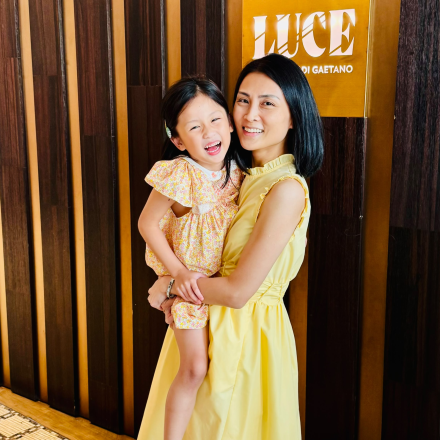
I’m Han Ying, a certified baby and toddler sleep consultant based in Singapore, supporting exhausted parents through night wakings, nap challenges, and bedtime struggles with a responsive, structured approach.
Most parents I work with aren’t doing anything wrong.
They are loving, responsive, and trying their best — yet sleep still feels unpredictable and exhausting.
Common Baby Sleep Struggles Parents Face
Catnapping
Your baby takes short naps (30–45 minutes) and struggles to connect sleep cycles during the day.
Co-Sleeping
You want to transition your baby or toddler from co-sleeping to sleeping independently in their own cot or room, but don’t know where to start.

Multiple Night Wakings
Your baby wakes every 1–2 hours at night and needs feeding, rocking, or your presence to fall back asleep.
Sleep Props
Your baby relies on rocking, feeding, patting, or a pacifier to fall asleep.

Chronic Sleep Deprivation
Your child isn’t getting enough sleep, becoming overtired, irritable, and finding it hard to settle.

Stalling Bedtime Antics
Bedtime becomes long and frustrating, with your child resisting sleep or repeatedly calling you back.
Many of these sleep struggles aren’t caused by a lack of effort or consistency. Often, they happen because sleep timing, sleep pressure, or sleep associations aren’t aligned with a child’s individual sleep needs.
To the tired mama running on little sleep
I know how exhausting it can feel when your baby isn’t sleeping well.
I’m Han Ying, a baby and toddler sleep consultant in Singapore, and a mum too.
Like many parents, I started out doing everything I could to help my baby sleep, yet still felt depleted, overwhelmed, and unsure what else to try.
Experiencing sleep deprivation firsthand showed me how deeply sleep affects not just our babies, but our emotional and physical wellbeing as parents.
With the right guidance and a structured, responsive approach, sleep became more settled and our days felt calmer and more manageable again.
Today, I support families across Singapore in helping their babies learn healthy, independent sleep through a structured and responsive approach so sleep can become calmer, more predictable, and sustainable.
Because sleep isn’t a luxury.
It’s a foundation for your baby’s growth and for your wellbeing too.

Why Sleep Timing Matters for Your Baby’s Sleep
Babies of the same age can sleep very differently. Some need more rest, others less. Following rigid age-based wake windows can sometimes lead to overtiredness or resistance at bedtime.
That is why I don’t begin with rigid schedules or generic age-based charts. Instead, I look closely at your baby’s actual sleep patterns, sleep pressure, and daily rhythms before recommending changes.
When timing is right, babies often:
- Fall asleep more easily at bedtime and naps
- Protest less when being put down for sleep
- Connect sleep cycles more consistently
This forms the foundation of the structured sleep support I provide to families.
The Sleep Foundations Method™: A Structured Approach to Baby Sleep
I use a structured, timing-first approach to help babies and young children build sustainable sleep habits — without rushing them into change before they are ready.
Step 1: Understand Your Baby’s Individual Sleep Timing and Patterns
Every baby is different. Instead of relying on generic wake-time charts, I look at real sleep patterns to understand how your baby responds to sleep and wake times in daily life.
This helps us:
- Avoid unnecessary overtiredness or undertiredness
- Reduce confusion at bedtime and naps
- Set your baby up for smoother settling
Step 2: Prepare Your Baby for Sleep Training
Before formal sleep training begins, we make sure the foundations are in place — including timing, routines, and realistic expectations.
This preparation phase is about helping both baby and parents feel more ready for change.
Step 3: Build Independent Sleep Skills Gradually
Once timing is right and expectations are clear, we work on independent sleep in a structured, staged way that is appropriate for your child’s age and needs.
Some protest or crying can be a normal part of learning something new, but this approach aims to reduce unnecessary struggle by ensuring babies are put down at an appropriate time and supported through change consistently.
This method isn’t about quick fixes or one-size-fits-all solutions — it is about creating sleep that lasts.
A Responsive Approach to Baby Sleep Support
Many parents worry that helping their baby sleep independently means leaving them to cry or pushing change too quickly.
That isn’t how I work.
My approach is responsive, timing-led, and developmentally appropriate.
We focus on understanding your child’s sleep needs first, then supporting change gradually, with consistency and reassurance.
This means:
Responding to your baby’s cues, not ignoring them
Making changes only when timing and readiness are right
Supporting emotional safety alongside independent sleep skills
Helping parents feel confident and informed, not pressured
Independent sleep doesn’t have to come at the cost of connection.
With the right support, babies can learn to sleep while still feeling safe, supported, and understood.
As a baby sleep consultant in Singapore, my goal is to help babies learn healthy sleep habits while still feeling supported and secure.
Sleep isn’t a luxury — it’s a necessity
When sleep is consistently disrupted, it doesn’t just affect the night. It affects how both mums and babies feel and function during the day.
For mums
Poor sleep can make it harder to:
- Stay patient and emotionally regulated
- Think clearly and make decisions
- Maintain energy, mood, and resilience
For babies and toddlers
When sleep is fragmented or insufficient, children may:
- Become more irritable, fussy, or unsettled
- Struggle to regulate emotions
- Find it harder to focus and learn during the day
Supporting better sleep isn’t about perfection. It’s about protecting the wellbeing of both you and your child.

Sleep Support for Babies and Toddlers at Every Stage
Newborn
(0 - 12 weeks)
Start off on the right foot with your newborn. I help parents:
- Understand newborn sleep patterns
- Establish healthy routines from day one
- Navigate night feeds with confidence
Infant
(13 weeks - 23 months)
Struggling with night wakings, early mornings, or short naps during infancy? I teach baby:
- Fall asleep independently
- Resettle during night wakings
- Build consistent nap and bedtime routines
Toddler & Older Children
(2 – 5 years)
Toddlers and young children develop growing independence, which can bring new sleep challenges.
- Smooth transitions from cot to bed
- Reduce bedtime resistance and night wakings
- Improve daytime mood with better-rested toddlers
Every child’s sleep journey is different. I support families at each stage of development, from newborn sleep foundations to toddler sleep challenges.
Success Stories from Other Parents
Every family’s situation is different, but many parents come to me feeling exhausted, unsure, and overwhelmed — just like you might be feeling now.

“Sleep training was life-changing. Our babies now sleep independently and our whole families are finally getting the rest we needed.”
Lynnette (mum of Lexy, 7 months when we worked together)
Gail (mum of Raon, 10 months when we started)
✔ No more carrying baby to sleep for naps or bedtime
✔ Night wakings and overnight feeds eliminated
✔ Babies now falling asleep independently and sleeping through the night
Posted on Google
 Carol
CarolTrustindex verifies that the original source of the review is Google.
Sleep training has made such a huge difference for our family. Before we started, my 6-month-old son was waking up multiple times throughout the night — sometimes as many as 5–6 times — and we had to constantly help him get back to sleep. I also used to nurse him to sleep, and transferring him into the cot was always a challenge. Sometimes he would wake up during the transfer, and we would have to start the whole process again. We also relied on an electronic swing cradle to help him fall asleep. After sleep training, he learnt how to fall asleep independently. Now, we no longer need to nurse or rock him to sleep or rely on the cradle. We simply create a comfortable sleep environment, put him down awake, and he is able to settle and fall asleep on his own. The biggest difference for me is how much more rested I feel. Now that my son can fall asleep independently and is sleeping much better at night, I’m finally able to get proper rest too. I’m really grateful for the guidance and support throughout the process. It has made bedtime so much easier and given both my son and me much better sleep.Posted on Google C ChiewSleep is really important to us so we engaged Han Ying when baby was 9 weeks old. Prior to that, baby was always carried to sleep by nanny so we had to change her habits. The gentle approach worked wonders and worked at a reasonable pace too. Han Ying also was patient to respond to our numerous queries haha. Thanks Han Ying for your help in our quest to get more sleep!Posted on Google
 Kevin LeeWe engaged Han Ying to support our twin girls’ sleep needs when they were 9 weeks old. Han Ying’s approach for newborn sleep is patient and responsive - there was definitely some resistance and crying at the start while the babies adapt and learn but we felt supported through out. Juggling two babies at the same time is challenging and this journey requires trial and error. The best outcome in investing in this is knowing how to respond to our girls’ needs and seeing them wake up cheerfully. Thanks Han Ying for journeying with us.Posted on Google
 Sheryn LohInstead of handing us a one-size-fits-all sleep training method, Han Ying suggested a one-week sleep transition period to wean off sleep props (like baby carrier and pacifier), analysed our baby’s sleep data and suggested suitable wake windows accordingly. The customized sleep plan we received was perfectly aligned with our baby’s specific circadian rhythm and temperament, rather than a generic age-based chart. Han Ying is also extremely patient and detailed in answering all questions we had. She also provides useful and relevant resources along the way (instead of dumping all information all at once). She is incredibly supportive, understanding of parental exhaustion, and highly responsive to our concerns through WhatsApp during the support hours. Thanks to this tailored approach, our baby went from erratic catnaps and multiple night wakings to predictably connecting sleep cycles and falling asleep independently.Posted on Google
 chelsea WooHan Ying has been super helpful in sleep training our baby. He has now been able to sleep through the night of 11-12.5 hours and fall asleep independently on his own during his naps. We appreciate all her help!Posted on Google
 Celestine SeowWe engaged Han Ying to help with my baby's sleep when she was 11.5 months old. Han Ying was very clear in her explanation during the discovery call and hence we decided to engage her. The call right before the commencement of the sleep training was also clear. My baby has been dependent on a pacifier and carrying to fall asleep. My objective was really to wean her off the pacifier as well as to solve her night feed. Turns out my child was having early wakes. The sleep training part was really tough (but subjective for people) for my husband and I. However, Han Ying was understanding during this time and took in our feedback as well. I think open communication is important and I am thankful that we managed to work together to solve my child's sleep issues. I also want to particularly mention that the transition phase really helped a lot and I really really appreciate it. My child fell sick on the last day of the sleep training period and I am thankful that Han Ying was flexible with the closing call as well as the final follow-up call. Looking back, it has really been a journey and I am glad we were in this together. Now my child sleeps without a pacifier and has also weaned off her night feed. She also sleeps independently at home now. Thank you, Han Ying!Posted on Google
 Maegan LiuWe engaged Han Ying to sleep train baby C when she was 5 months. We were exhausted after months of dealing with hourly wakes from 2/3am onwards, early morning wakes at 5-6am, full wake windows in the middle of the night etc., and this was despite already trying to follow wake windows and setting a consistent early bedtime routine since newborn days. Baby C was also often drinking milk to sleep as she needed to be drowsy in order to feed well. To be honest, for a while I had kind of accepted that Baby C was a “low sleep needs” baby and i might just have to wait until she “grows out” of this phase. Even in the initial phases of speaking to Han Ying, i was skeptical that the program could work and i was also super worried that Baby C would end up not drinking enough milk if she could not feed to sleep. To our surprise, Baby C learnt to fall asleep independently soon after we started the program and slept a long stretch that very first night (conversely we could not sleep partly cause we were so used to waking up frequently and kept checking the monitor in disbelief that she was still asleep 😂). Fast forward, it has now been about 5 months since we sleep trained Baby C and i really think it is the best decision we have made!! Granted her sleep is not always perfect, but it is often due to factors out of our control, like poor IFC naps, illness, etc. Sleep training has given us the stability that we were lacking before. And upon reflection now the benefits really go beyond sleep itself (which is a given): Mood - baby rarely wakes up crying and always greets us with the biggest smile to start the day. She almost does not cry/fuss at all during her wake windows. Feeding - she has been drinking full feeds of milk! Awake! Predictability - when she does fuss or cry, we no longer need to second guess whether she could be tired? Or hungry? Or both?? And because the fussing is so rare we immediately know there must be something else bothering her (often this means she is not feeling well). Recovery - i also noticed that she is able to get better sleep even when she is sick as she still prefers to rest in her crib. And this is helpful for recovery. Anyway the list could go on. i would like to caveat that sleep training takes some mental prep (at least it did for me), cos there will be protesting from the bb due to changing of habits they have been very used to and its important for parents to stay steady through the process so that bb can feel secure. Beyond sleep training, it also takes significant commitment from the parents’ end to set and maintain a routine. But i think it is really worth it. Thank you Han Ying for the support and helping us lay solid foundations to get to where we are now.Posted on Google
 Su wai myoOur LO, Zoey, was not able to sleep independently previously. We needed to carry her and rock her for naps. She would only sleep at night when I was beside her and wake up crying in the middle of the night asking to be carried. We decided to seek for Han Ying's help when Zoey was 22 months old. Initially, we were very concerned about leaving her by herself and letting her cry. However, with Han Ying's support and gentle step by step approach, we could see Zoey's night sleep was improved tremendously from night 3 onwards with minimum tears. Now Zoey is able to sleep independently at both day and night time. She would even sing songs by herself before falling asleep. I was sleep deprived and very exhausted for almost 2 years. Thanks to Han Ying, I am finally able to have some good night rest.Posted on Google
 Kelly HeNo regrets engaging Han Ying to help us with our baby’s sleep! Our baby was around 5mo and would rely on pacifier, carrying and rocking to sleep. We knew it wasn’t sustainable, especially when she even started to resist those props and would protest almost every nap and bedtime. With sleep training under Han Ying’s patient and structured guidance, our baby quickly learnt how to fall asleep independently and her sleep quality improved. We also gained valuable knowledge about optimising our baby’s sleep which we believe is key to a happy and healthy baby! Han Ying was responsive, clear and detailed during the training, which gave us a lot of reassurance. She’s also a warm and kind person who supported us very well. We were once sceptical and unsure about sleep training, but we’ve witnessed how helpful it has been and we hope all struggling parents could consider this too!Posted on Google
 Rong Rong NgBaby R starting the program when she’s 12 weeks old. Before the program, baby R is taking short naps, needs to be rocked to sleep with pacifier on. We consulted Han Ying and within 3 days, we seen great improvement in baby R’s sleep and she can self soothe to sleep without any sleep props. Fast forward now, she takes 2hr each nap and sleep 7-8hrs straight thru the night. I’m really grateful for Han Ying and her guidance!!Verified by TrustindexTrustindex verified badge is the Universal Symbol of Trust. Only the greatest companies can get the verified badge who has a review score above 4.5, based on customer reviews over the past 12 months. Read more
Download your
FREE Night Wakings Guide
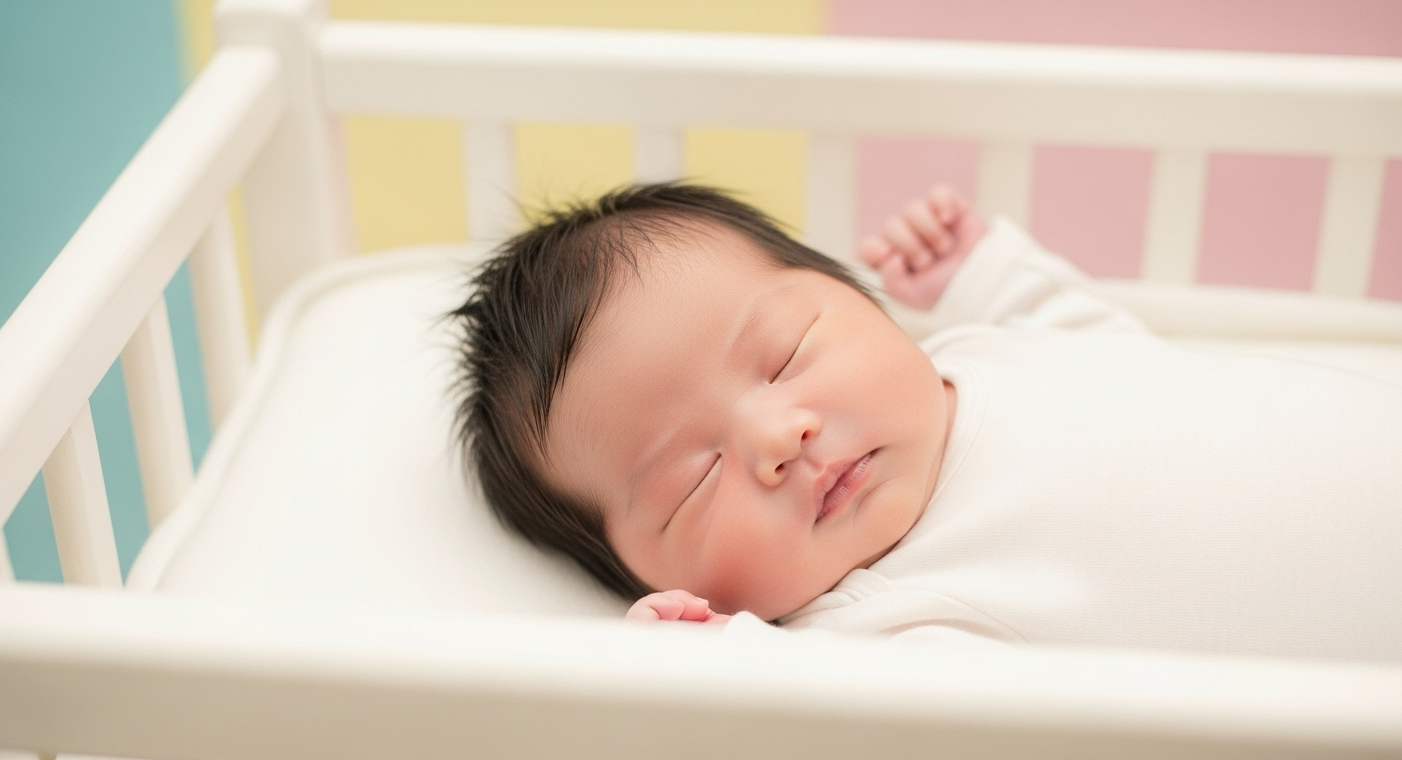
Baby Not Sleeping at Night?
Free guide to understand night wakings
Inside this free guide, you will understand:
🌈 Why babies wake frequently at night
🌈 Why some babies sleep lightly or wake often
🌈 What to look at first before changing routines
Thank you!
Your Night Wakings Guide will be sent to you soon.
Ready to improve your baby’s sleep?
Or download the free Night Wakings Guide if you are not ready to talk yet.