Rested Mum Happy Bub logo

Baby waking every 1–2 hours, taking short naps, or fighting bedtime?

Book a 20-minute sleep assessment call to understand what may be causing your baby’s sleep struggles, and whether my responsive, structured approach is the right next step for your family.

You are not doing anything wrong. Often, sleep struggles are not just about sleep training, but also sleep habits, sleep props, and schedule.

For families exploring personalised 1:1 sleep support. If we decide to work together after the call, support starts from $897.

⭐ 5-star rated by Singapore parents
👶 100+ families supported (newborn to 5 years)
📚 Certified Sleep Sense Baby & Toddler Sleep Consultant
🧠 Responsive, science-based approach (no cry-it-out)

han ying baby sleep consultant

What parents say after working with me

“Sleep training was life-changing. Our babies now sleep independently and our whole families are finally getting the rest we needed.”

Lynnette, mum of Lexy
Gail, mum of Raon

✔ No more carrying baby to sleep for naps or bedtime
✔ Night wakings and overnight feeds eliminated
✔ Babies now falling asleep independently and sleeping through the night

Every family is different, but many parents come to me feeling stuck with frequent night wakings, short naps, bedtime struggles, or strong sleep associations.

You might be wondering…

  • “Why is my baby still waking so often?”
  • “Am I creating bad habits?”
  • “Is this overtiredness, feeding, or a regression?”
  • “Why does nothing seem to work consistently?”


You have probably tried rocking, feeding, patting, adjusting naps, or changing bedtime routines.

But the nights still feel unpredictable, and you are exhausted.

Sometimes what helps most is understanding what is actually causing the sleep struggles in the first place.

Most sleep struggles are not because parents are doing anything wrong.

They are often linked to things like:

  • Sleep timing not matching your baby’s sleep needs
  • Strong reliance on sleep props such as rocking, patting, or feeding to sleep
  • Trying too many changes at once, which makes the process feel harder for both baby and parent


Before formal sleep training begins, I focus on strengthening your baby’s sleep foundations so the process feels more manageable and less overwhelming for both baby and parent.

Why many families start with a 1-week transition phase first

Rather than jumping straight into formal sleep training, I usually begin with a 1-week transition phase to help your baby and family prepare for the change.

This gives us time to reduce strong sleep props gradually, troubleshoot the schedule, and better understand your baby’s sleep patterns before expecting independent sleep.

During this phase, I help you:

✔ Gradually reduce reliance on rocking, patting, carrying, or feeding to sleep
✔ Observe your baby’s natural sleep patterns and wake times
✔ Adjust routines if your baby currently feeds or is heavily supported to sleep
✔ Prepare your baby for sleeping in the cot with more confidence and less overwhelm

Instead of making many changes all at once, we first strengthen the foundations so your baby is better prepared to learn a new sleep skill.

That is why many families start to see calmer bedtimes and longer stretches of sleep once the process begins.

What we will cover during this 20-minute call

This call is a chance for me to understand your baby’s current sleep situation, answer your main questions, and help you decide whether personalised support would be helpful for your family.

During the call, we will cover:

✔ Your baby’s current sleep challenges
✔ How your baby is currently falling asleep
✔ Whether sleep timing, sleep associations, or routine may be contributing
✔ How my support works
✔ Whether my approach feels like the right fit for your family

This call is not a full troubleshooting consult or a step-by-step sleep plan.
It is a short assessment call to help you get clarity on the most likely sleep blockers, and whether working together makes sense.

If we decide to work together after the call, personalised sleep support starts from $897.

This call is for you if…

  • Your baby is struggling with short naps, frequent night wakings, bedtime resistance, or strong sleep associations
  • You are looking for a responsive and structured approach rather than cry-it-out
  • You want personalised guidance, not just generic sleep tips
  • You are open to making consistent changes at home
  • You are considering 1:1 sleep support and want to understand whether I am the right fit

This call may not be for you if...

  • You are only looking for free troubleshooting tips without ongoing support
  • You are not ready to make changes yet
  • You are hoping for a one-size-fits-all answer without looking at your baby’s overall sleep picture
  • You are not currently exploring personalised sleep coaching

Hi, I’m Han Ying

I am a certified Sleep Sense Consultant and the founder of Rested Mum Happy Bub.

I support tired parents who are struggling with bedtime battles, short naps, frequent night wakings, or strong sleep associations, and want a more responsive, structured approach to sleep training.

My approach focuses on helping parents understand their baby’s sleep patterns, improve the schedule where needed, and reduce reliance on sleep props gradually so babies can learn to fall asleep in the cot with more confidence.

I do not use cry-it-out.
Instead, I guide families through a step-by-step process that feels clear, personalised, and manageable.

📚 Certified Sleep Sense Consultant
👶 100+ families supported
🧠 Responsive, structured approach
🤩 Strong focus on sleep foundations and schedule troubleshooting

Real results from families I’ve supported

Here are a few examples of the kind of progress families have seen with structured, responsive support.

CASE STUDY 1

6-Month-Old Baby

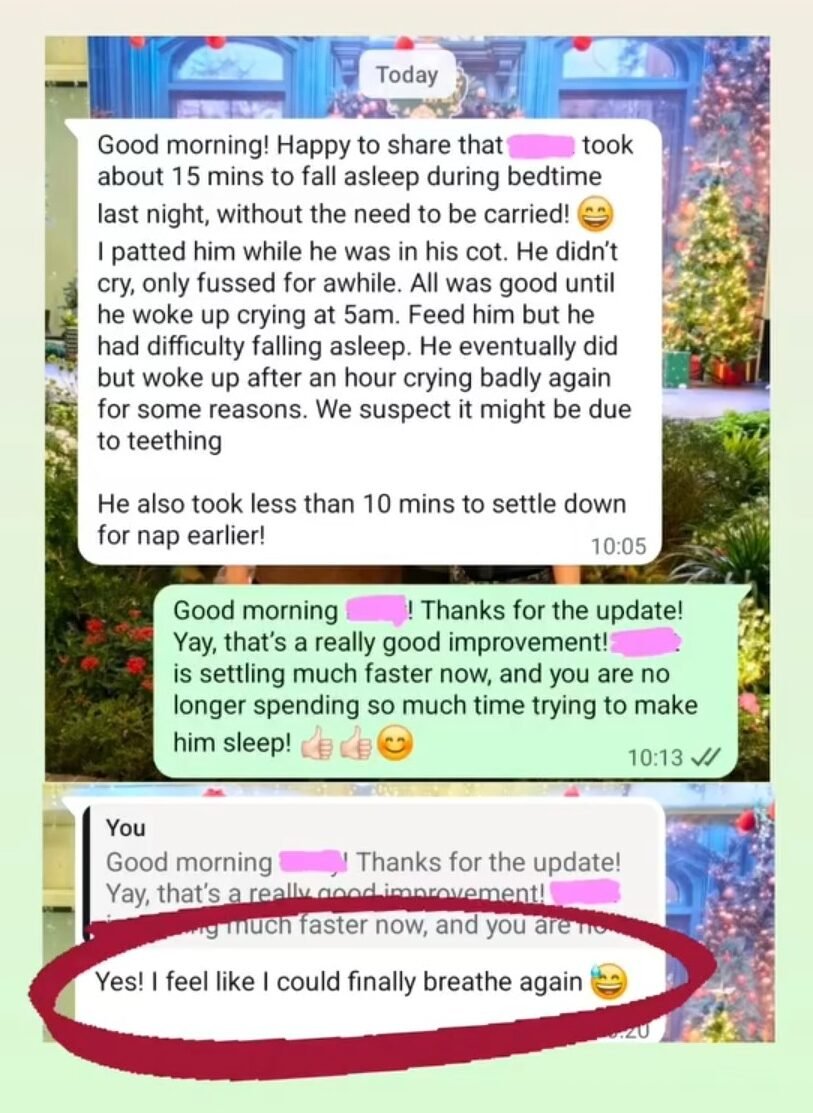
Bedtime settling improved to about 15 minutes

Before support, bedtime took a long time and required a lot of help.

After making changes:

✔ Bedtime settling improved to about 15 minutes
✔ Baby was able to settle in the cot with patting
✔ Mum finally felt able to relax again

“I feel like I could finally breathe again.”

CASE STUDY 2

6.5-Month-Old Baby

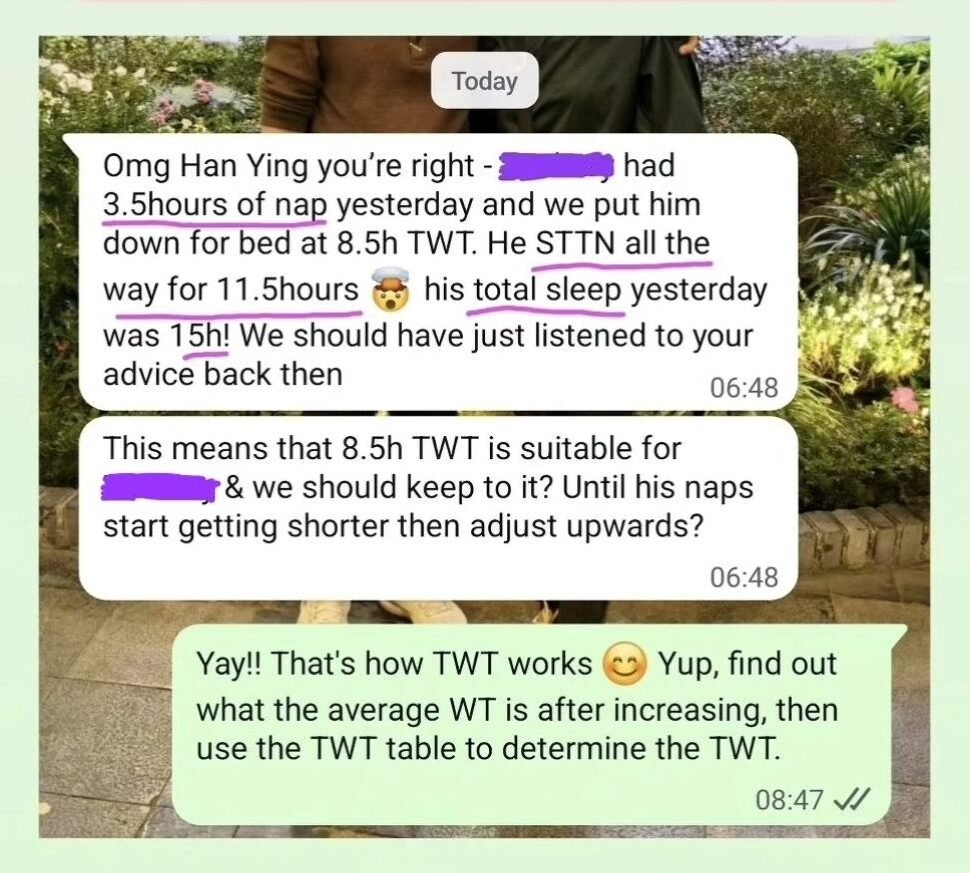
From inconsistent sleep to 15 hours total sleep daily

Before starting, sleep was inconsistent.

After adjusting the baby’s schedule, sleep improved to:

✔ 11.5 hours overnight
✔ 15 hours total daily sleep
✔ Faster settling at bedtime

Sometimes sleep struggles are not only about how babies fall asleep. Daily schedule can play a big role too.

6.5mo baby sleep

CASE STUDY 3

12.5-Month-Old Baby

From frequent wakings to 12 hours overnight

After improving the daily schedule, this family saw:

✔ 12 hours overnight
✔ No night wakings
✔ Parents feeling confident adjusting wake times

Sleep training is not only about helping babies fall asleep. It is also about having a daily schedule that supports better sleep over the long term.

CASE STUDY 4

22-Month-Old Toddler

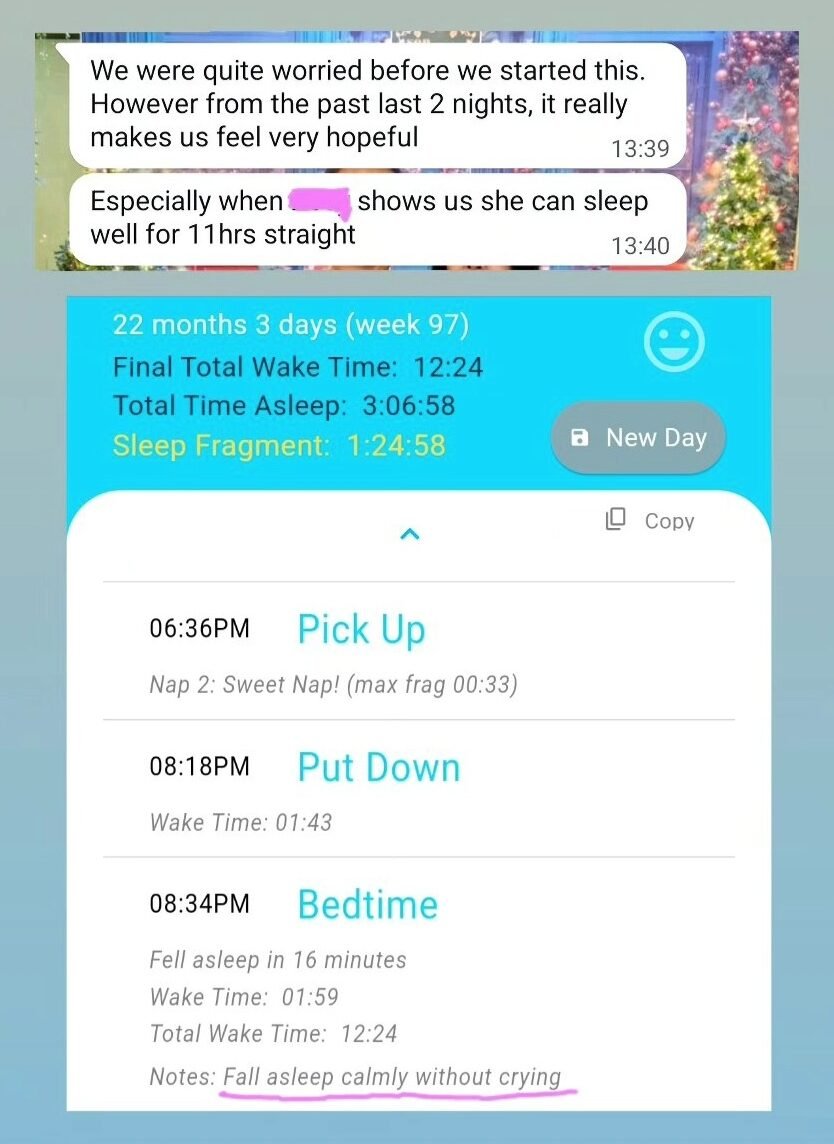
From worried parents to calm, predictable sleep

Before starting, the family felt worried and bedtime was hard to manage.

With consistency and structured guidance, this toddler learnt to settle more independently and the family saw:

✔ 11 hours overnight
✔ Calm bedtime
✔ Independent settling
✔ A no cry-it-out approach that felt right for the family

22mo sleep training

Kind words from parents I’ve supported

Parents often come to me feeling exhausted, confused, and unsure what to try next.

These are some of the experiences families have shared after getting support with their baby’s sleep.

Ready to understand what may be causing your baby’s sleep struggles?

If your baby is waking frequently, taking short naps, fighting bedtime, or relying heavily on rocking, patting, or feeding to sleep, this call is a good first step.

We will look at what is happening, talk through whether my approach is the right fit, and help you decide on the next step with more clarity.

If we decide to work together after the call, personalised 1:1 support starts from $897.

Frequently asked questions

Q1. Will you ask me to do cry-it-out?

No. My approach is responsive and structured, with a strong focus on reducing sleep props gradually, improving sleep foundations, and helping babies learn to fall asleep more independently in a way that feels manageable for both baby and parent.

Q2. Do I need to stop night feeds or breastfeeding?

Not necessarily. That depends on your baby’s age, feeding patterns, and overall situation. For younger babies especially, night feeds may still be developmentally appropriate. If you are breastfeeding, that does not automatically mean you need to wean in order to work on sleep. We can look at what is age-appropriate, how feeds are currently being used, and whether any changes would actually be helpful, without taking a one-size-fits-all approach.

Q3. Can this work if baby is room-sharing?

Yes, it can. Some families I support start with baby sleeping in the same room, and we work within what feels realistic for the family. The approach may look slightly different depending on your setup, but room-sharing does not automatically mean sleep training cannot work.

Q4. How quickly will sleep improve?

Every baby is different, so I cannot promise an exact timeline. Many families do start to see progress within about a week or so, but it really depends on your baby’s readiness and how consistent the family is with the approach. My goal is not just quick results, but helping you build sleep habits that feel sustainable and realistic for your family.